You’ve found the Walkman. You’ve had it restored. Now comes the fun part: choosing the frame that will hold it for the next thirty years. The wood you pick changes the whole mood of the piece — warm, dramatic or light and airy. Here’s how to choose.
If you would rather skip the DIY, our ready-made Sony Walkman WM-EX610 Cassette Frame is framed, restored, and ready to hang.
Why the frame matters as much as the player
A restored Walkman is a small object, and its frame is what turns it into wall art. The right wood finish makes the machine look like it belongs in the room; the wrong one fights with everything around it. The good news? There is no wrong answer — only the right fit for your space.
Cherry wood: warm, rich and classic
Cherry wood has a warm reddish-brown tone that deepens beautifully with age. It pairs naturally with beige walls, cream upholstery and the kind of cozy, lived-in rooms where vintage audio feels at home. If your Walkman is a dark model, cherry provides a gentle contrast that lets the player stay the star.
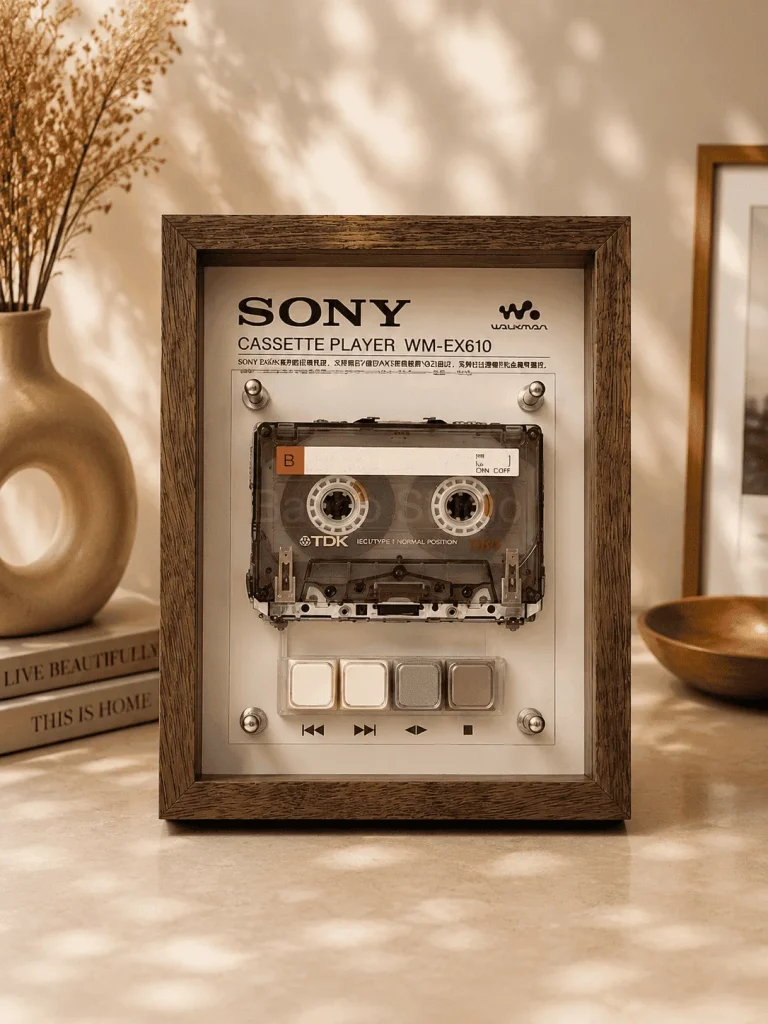
Walnut wood: dark, dramatic and modern
Walnut is the bold choice. Its deep chocolate-brown grain adds instant sophistication and works beautifully in minimalist, industrial or modern spaces. A dark Walman on walnut can blend together, so walnut often shines brightest with lighter players — or when you want the whole piece to feel like a statement.
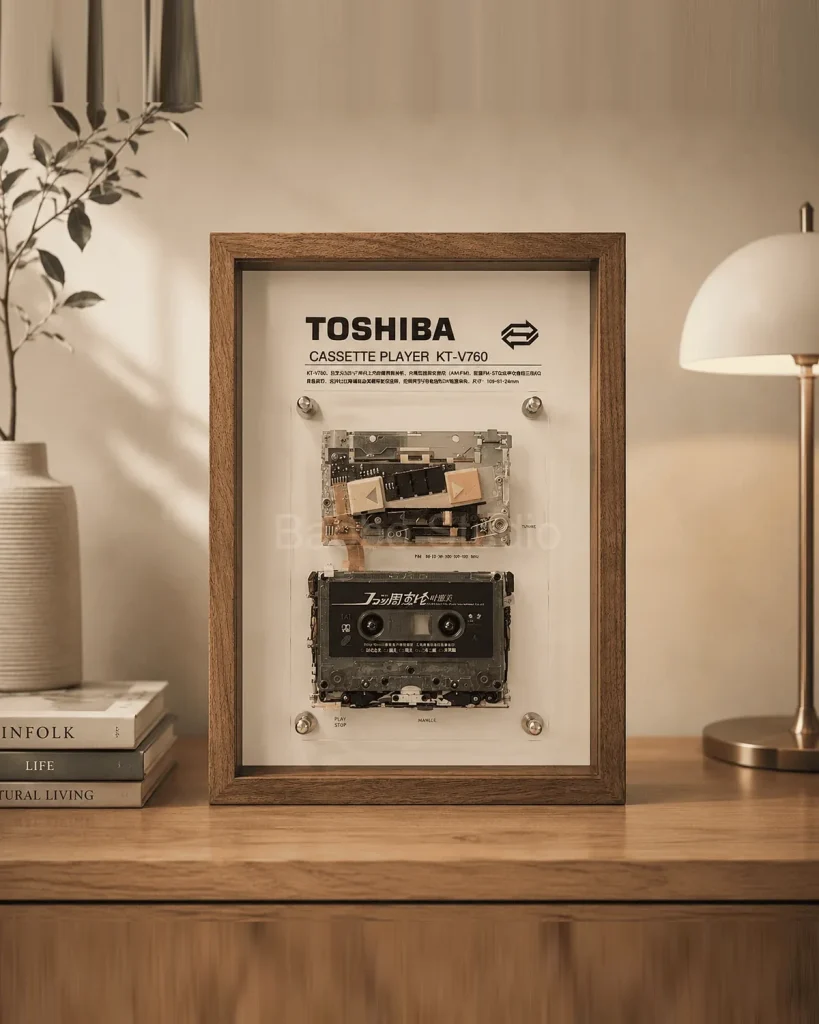
Pine wood: light, natural and scandinavian
Pine keeps things simple and bright. Its pale, honey-toned surface suits light walls, natural textures and airy rooms. If you prefer a gallery look that recedes quietly into the background, pine is the low-key option that lets the machine and its story do the talking.
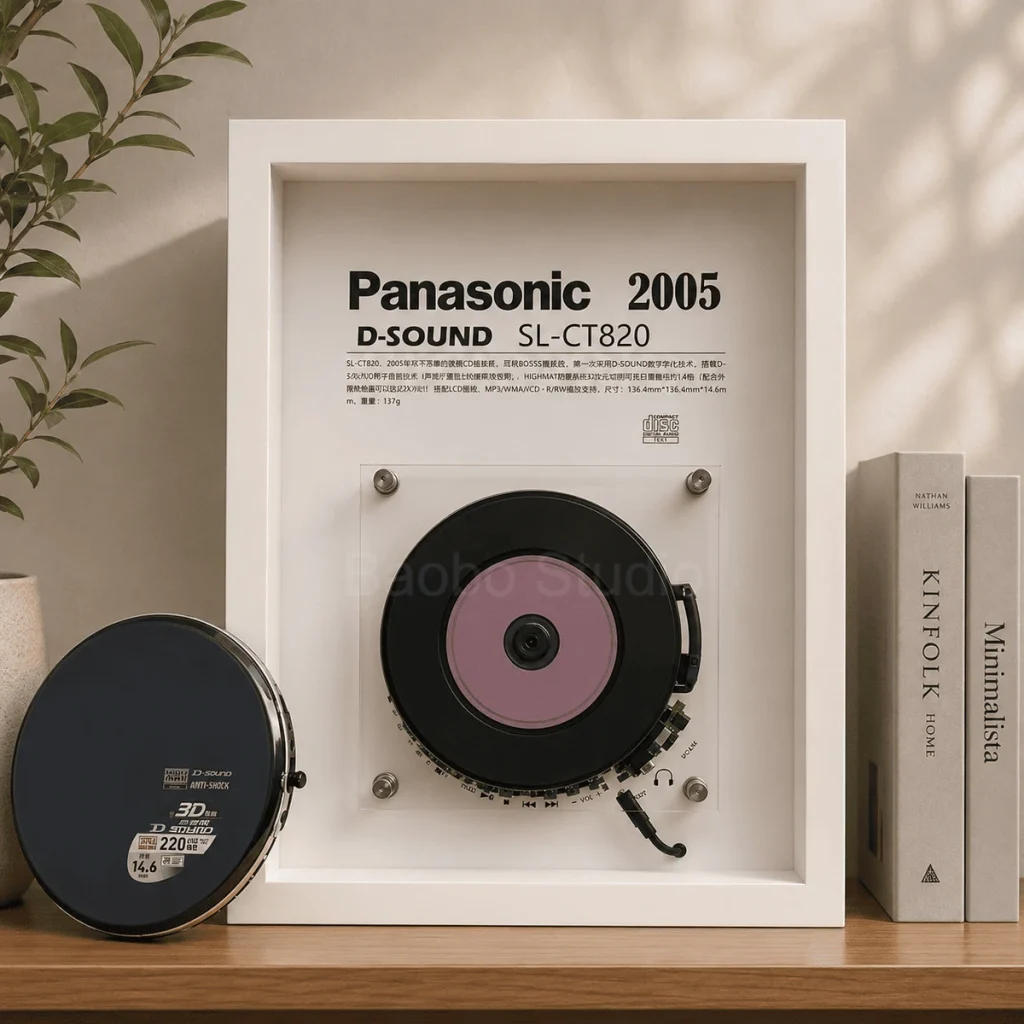
How to choose: three quick questions
What color are your walls? Warm beige and cream → cherry or walnut. White and light gray → walnut or pine.
What style is your room? Cozy and classic → cherry. Sleek and modern → walnut. Minimal and natural → pine.
What does your Walkman look like? Dark player → cherry or pine for contrast. Silver or light player → walnut for drama.
Size matters too: 8-inch vs 9-inch
Beyond the wood, you’ll pick a size. An 8-inch frame keeps things compact and neat — ideal for shelves, desks and smaller walls. A 9-inch frame gives the piece more presence, which works best when the Walkman is the main artwork in the room. Both include the same solid wood frame and acrylic dust cover.
Your frame, your rules
If you’re not sure, go with what makes you smile. A hand-restored player already carries decades of history; the frame is just the stage. Browse our restored WM-EX610 — available in cherry, walnut or pine — or see all restored cassette frames and pick the wood that feels like home.
Related reading
- How to Frame a Walkman: Turning a Vintage Player into Wall Art — The full framing process, once you have picked the wood.
- The Best Vintage Cassette Players to Display as Wall Art — Players we think frame up best.
- Walkman vs Discman: Which Vintage Player Makes Better Wall Art? — Cassette or CD — which era to put on the wall.