Before smartphones, before streaming, there was a cassette player small enough to slip into a pocket. The Walkman didn’t just change how we listened to music — it changed how we lived with it.
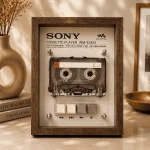
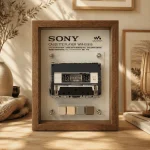
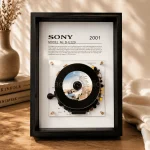
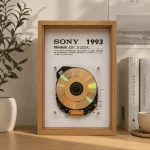
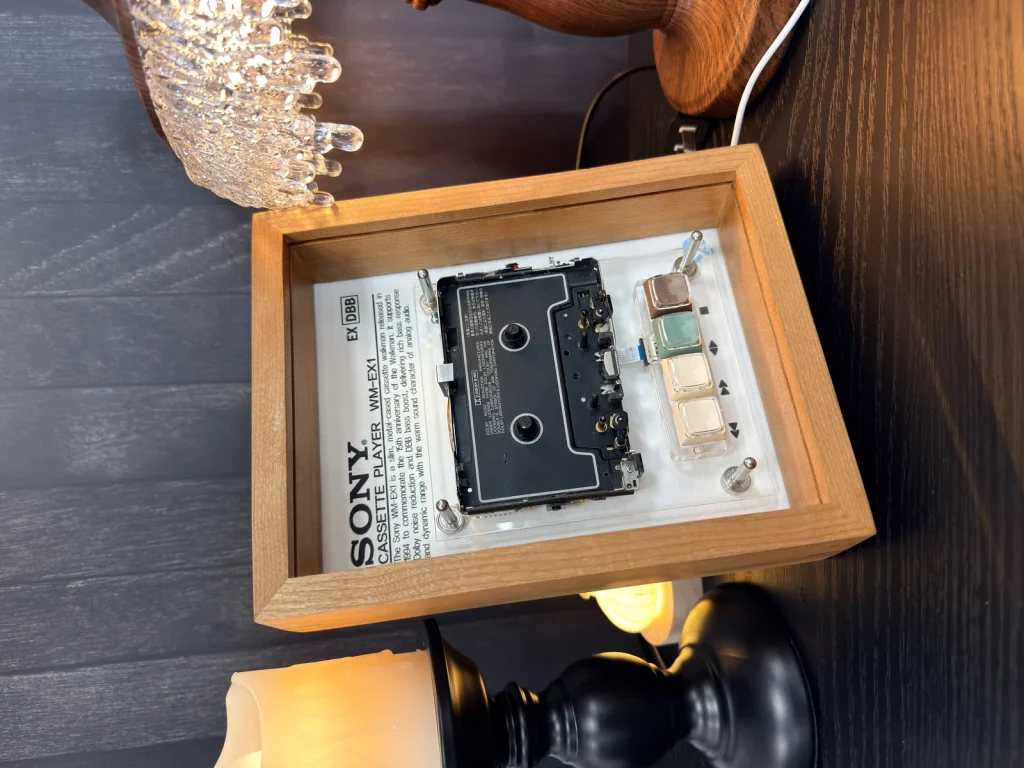
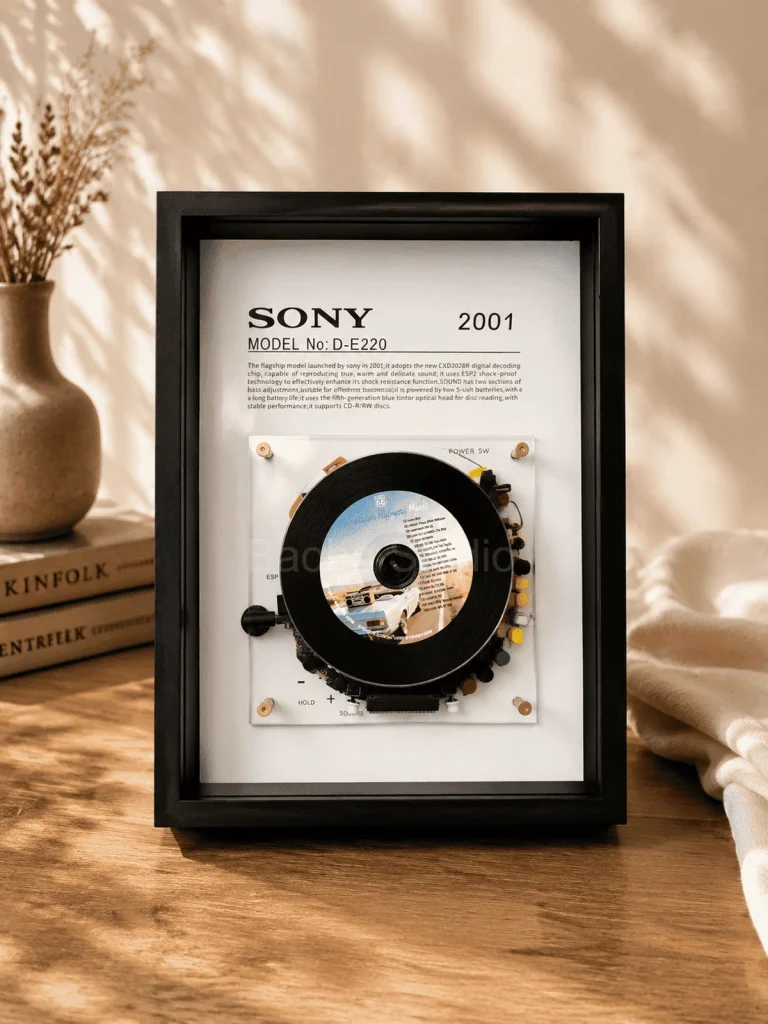
You can see this history up close in our restored Sony Walkman WM-EX1 Cassette Frame and Sony Discman D-777 CD Frame.
1979: The Walkman Changes Everything
Sony introduced the TPS-L2 Walkman in 1979. It was dismissed by some as a gimmick — a tape player you couldn’t share with anyone. It turned out to be one of the most successful products in history. Music became personal, portable, and private. The 80s belonged to the cassette.
1984: The Discman Brings Digital to Your Pocket
Five years later, Sony launched the D-50 Discman, the first portable CD player. CDs promised flawless sound — no hiss, no rewinding — and the Discman made that promise portable. The 90s belonged to the compact disc.
The Icons We Still Love
Some models defined their era:
- The ultra-slim Sony Walkman WM-EX1 — a feat of 90s miniaturization
- The workhorse WM-EX610 — the last great generation of cassette portables
- The Discman D-225CR — a CD player built for the golden age of the format
Why We Frame Them Now
These machines didn’t just play music — they hold the memory of it. That’s why we restore them by hand and frame them as wall art: a working piece of the 80s and 90s, ready to play and beautiful to look at.
Every frame in our collection is fully playable, honestly vintage, and hand-restored in our studio. If you grew up with a Walkman in your pocket — or wish you had — this is the piece of history that brings it home.
Related reading
- The Most Collectible Sony Walkman Models of All Time — The models that came out of this history and still hold value.
- Cassette vs CD: The Sound and Soul of Vintage Audio — How the two formats actually sound side by side.
- Walkman vs Discman: Which Vintage Player Makes Better Wall Art? — How that history looks once it is mounted on a wall.