

You’ve decided to give a piece of music history — great choice. But now comes the hard part: Walkman or Discman? Both are nostalgia gold, both make beautiful wall art, and both actually play. The right answer depends entirely on who’s opening the gift.
Short answer: Walkman or Discman?
If your recipient grew up on mixtapes and wants warm, analog sound, choose a Walkman. If they grew up on CDs and care most about clean, detailed sound, choose a Discman. Both are hand-restored, fully playable and framed and ready to hang — so you really can’t go wrong.
What’s the difference between a Walkman and a Discman?
Three things separate them: the media, the mechanism, and the sound. A Walkman reads a cassette with a magnetic head pressed against a moving tape, driven by a rubber belt. A Discman reads a CD with a laser and a motorised optical pickup, with no physical contact at all.
That single difference explains everything else. Cassettes are analog: the sound is warmer and slightly compressed, and every tape carries the wear of every previous play. CDs are digital — silent between tracks, no hiss, and detail a cassette physically cannot hold. Neither is better; they are answers to two different decades.
Walkman vs Discman: the quick comparison
| Walkman | Discman | |
|---|---|---|
| Best for | 80s kids, mixtape collectors | 90s kids, CD collectors, sound purists |
| Sound | Warm, analog, characterful | Clean, detailed, no tape hiss |
| Media | Cassettes — harder to find, more fun to collect | CDs — easy to source and burn |
| Design | Colorful 80s and 90s bodies | Retro-futuristic metal and plastic |
| Maintenance | Belts and playback heads | Laser and optics |
| Wall display | Warm vintage nostalgia | Futuristic statement piece |
| Price (restored & framed) | $459 – $1,019 | $349 – $1,199 |
Sony Walkman vs Sony Discman
Most people comparing the two are really comparing Sony with Sony. On the cassette side, the WM-EX1 and the WM-EX622 are the models collectors still argue about. On the CD side it is the D-777 and the D-J50. Sony built both formats to the same standard, so the real question is not which company — it is which music you already own.
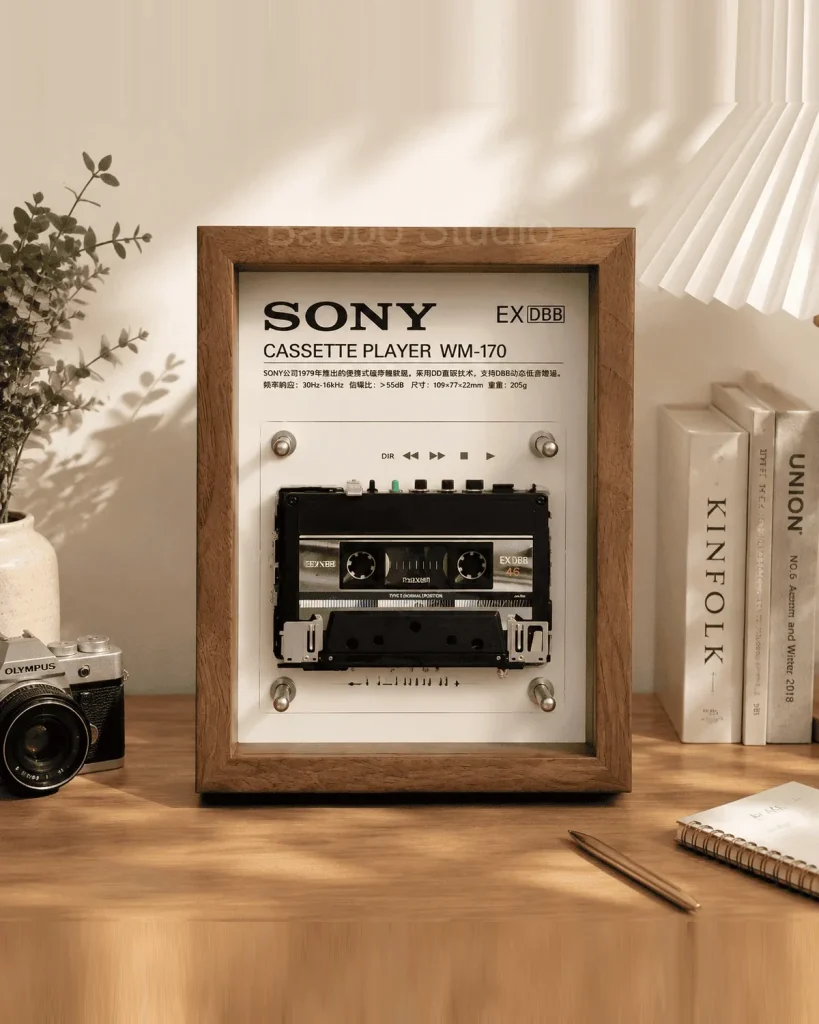
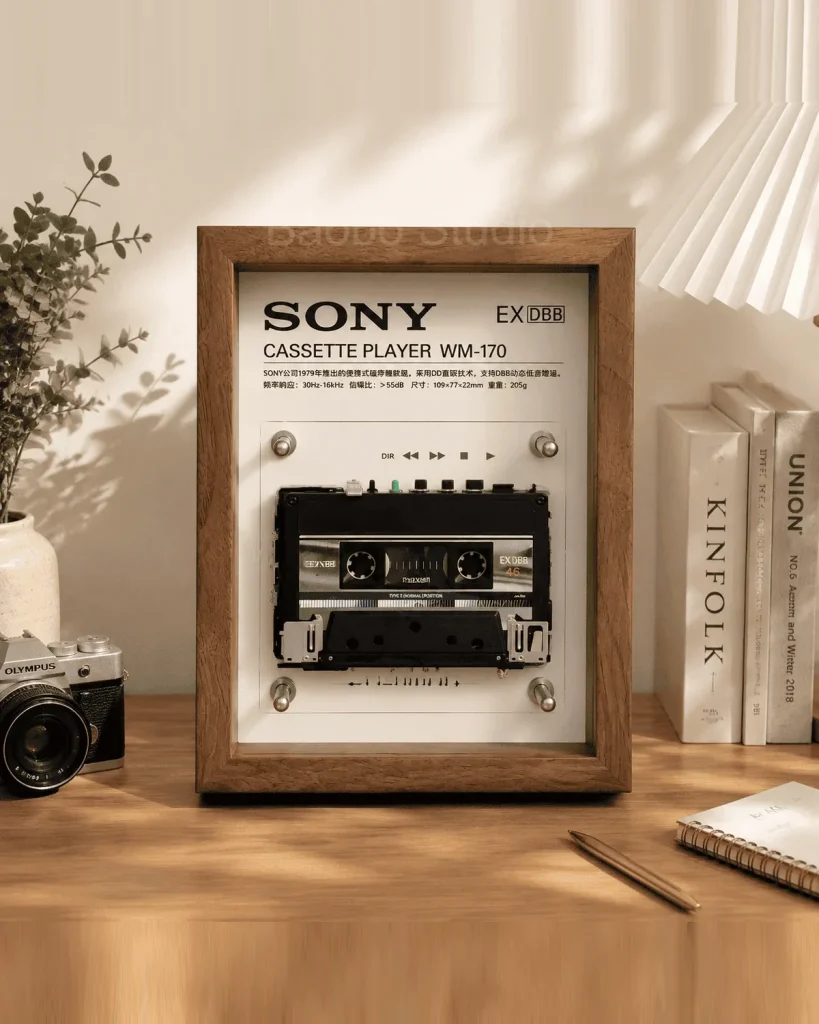
The case for a Walkman
A restored Walkman is the gift for the person who still talks about mixtapes, who kept their cassette collection, or who was the 80s kid with the portable stereo. Cassettes have made a real comeback, and holding a working Walkman again is a genuinely emotional experience. Tapes feel physical — you flip sides, you hear the hiss, you remember the ritual.
For daily carry, a slim model like the Sony WM-EX610 or the iconic WM-EX1 fits in a shirt pocket and sounds far better than people expect. The WM-EX622 is one of the thinnest Walkmans Sony ever made — pure 90s engineering.
The case for a Discman
The Discman is the 90s answer: sharper sound, no hiss, and a design language that still looks futuristic in a wood frame. It’s the gift for the person who wore out their CDs in the car, who had a tower of jewel cases, or who remembers the first time they heard a favorite album with zero tape hiss.
The Sony D-777 is the model collectors argue about most — widely considered one of the best-sounding Discmans Sony ever made — while the D-225CR captures that warm early-CD character. For a compact everyday classic, the D-J50 is a great pick too.
Sound quality: analog warmth vs digital clarity
If you put a restored Walkman and a restored Discman side by side, the Discman wins on raw fidelity: no hiss, wider detail, cleaner highs. But “better” isn’t everything. A cassette through a good Walkman has a warmth and compression that many listeners genuinely prefer — it’s the sound of their memories. Choose by what the recipient loves, not by the spec sheet.
Media and day-to-day use
Cassettes are more scarce than CDs, but that scarcity is part of the fun: hunting down a favorite tape is a hobby in itself. CDs are easier to find and burn, which makes a Discman more practical if they want to use it regularly. Both players are framed, and the frame opens, so they can be taken out and played whenever the mood strikes.
Which one wins as a gift?
If they were born to 80s music and still get misty about mixtapes, get the Walkman. If they’re a 90s kid, a CD hoarder, or someone who mostly cares about sound quality, get the Discman. Still torn? Browse both collections and let the model that matches their personality decide — every player is hand-restored, fully playable, and framed and ready to hang.
Which makes better wall art: Walkman or Discman?
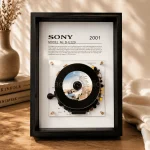
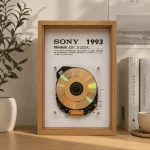
Both look good on a wall, but they read very differently. A framed Walkman is warm nostalgia: colourful 80s and 90s bodies, visible buttons, a cassette door you can still open. It is the piece that makes guests say “I had one of those.” A framed Discman reads more like industrial design — metal and grey plastic, a circular lid, a small display. It looks like a designed object rather than a gadget.
If the room is warm-toned and full of personal objects, the Walkman usually fits better. If it is minimal, dark or modern, the Discman often looks sharper. Either way the frame opens, so the player is display art and a working machine at the same time — you can take it down and play it whenever you like.
The model matters more than the format. The Sony WM-EX1 and WM-EX610 are the most striking cassette bodies we restore; on the CD side it is the Sony D-777 and D-J50. Every model is available in black, cherry wood, walnut wood or white, so the frame can be matched to the room.
Which is better as a gift, a Walkman or a Discman?
It depends on the recipient. Walkmans hit hardest for 80s kids and tape collectors; Discmans win with 90s kids and anyone who cares most about sound quality. Both are restored, fully playable, and framed and ready to hang.
Do restored Walkmans and Discmans actually play?
Yes. Every unit is fully serviced by hand — new belts and cleaned mechanisms for cassettes, aligned laser and cleaned optics for CDs — and test-played for hours before shipping.
Which retro player is more collectible?
Rare models like the Sony D-777 Discman and the WM-EX1 Walkman are the most sought-after, and both hold their value well when restored.
What if I pick the wrong one?
Every order is covered by our 15-day returns policy, so your recipient can swap their player for another model from our collection — you just cover the shipping.
Related reading
- Cassette vs CD: The Sound and Soul of Vintage Audio — The sound and media differences, in more depth.
- Cherry, Walnut or Pine: How to Choose the Perfect Wood Frame — Which frame finish suits which player.
- Gifts for Music Lovers: The Complete Vintage Audio Guide — If you would rather browse the whole gift guide first.
[…] Discman vs Walkman: Which Retro Gift Wins? — Walkman or Discman? The short answer. […]
[…] Discman vs Walkman: Which Retro Gift Wins? — Stuck between a Walkman and a Discman? This settles it. […]