There’s a simple truth about vintage Walkmans: they were built to last, but they need a little help getting there. A well-cared-for Walkman from the 1980s or 1990s can still sound fantastic today — and with the right habits, it will keep playing for decades to come.
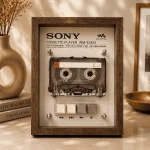
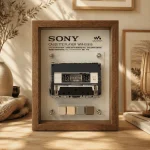
The easiest way to enjoy a vintage Walkman without the upkeep is a restored Sony Walkman WM-EX610 Cassette Frame that is ready to play.
Whether you own a freshly restored unit or a raw find that still needs work, these ten care tips will keep the tape rolling.
1. Keep it away from heat and magnets
Cassette players hate two things: heat and magnetic fields. Keep your Walkman out of direct sunlight, car dashboards, and radiators. And never store it on top of speakers, subwoofers, or anything with a strong magnet — over time they can quietly degrade the playback head and dull the sound.
2. Play a tape every few weeks
A stored Walkman is a drying Walkman. The grease inside the mechanism can stiffen, and rubber parts can harden, when a unit sits unused for months. Playing a cassette for a few minutes every couple of weeks keeps the motor, belts, and gears moving freely.
3. Clean the pinch roller and capstan
Over time, the rubber pinch roller picks up oxide from tapes and leaves a dark line that causes wow and flutter. Use a cotton swab with isopropyl alcohol (90% or higher) to gently clean the roller and the metal capstan next to it. Let it dry before pressing play. This single habit fixes more “slow” or “wobbly” Walkmans than almost anything else.
4. Demagnetize the playback head
Magnetic fields slowly build up on the playback head, especially if you play lots of tapes. A small demagnetizer, used every few months, keeps the head neutral and the high frequencies crisp. If that sounds like too much work, a professional service — like the ones we do on every unit before it ships — will handle it for you.
5. Replace belts before they fail
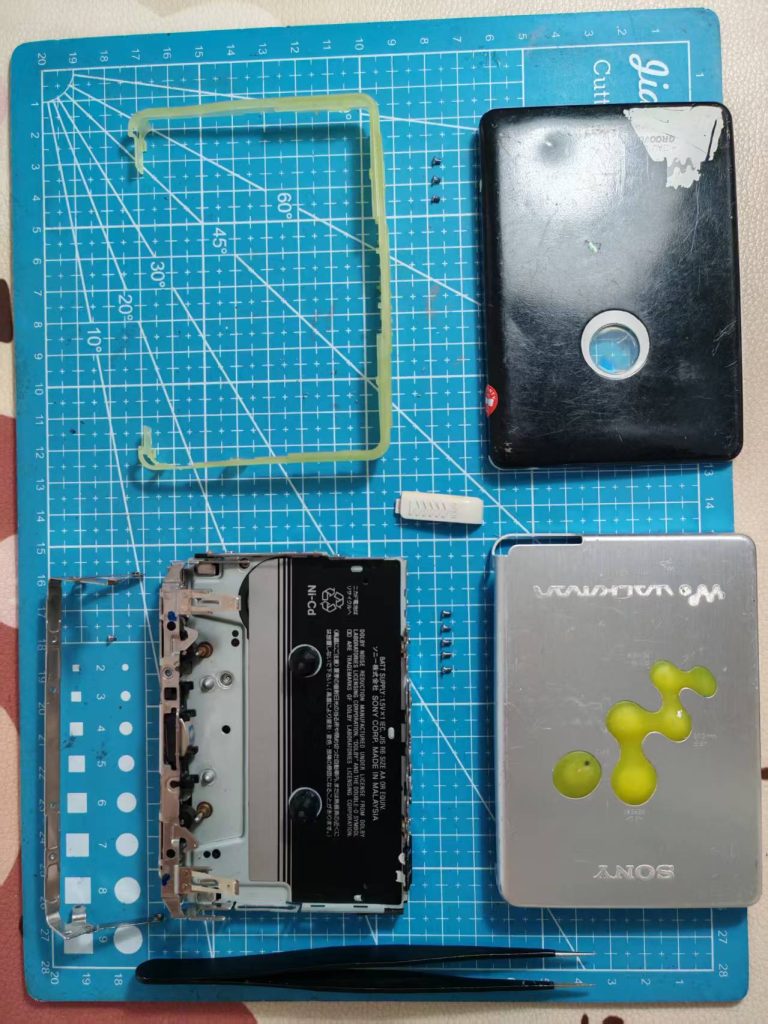
Belts are the most common failure point in any vintage Walkman. They stretch, harden, or turn into goo after 20–30 years. If your player sounds slow, fast, or won’t wind at all, the belt is usually the culprit. Replacing it is a delicate job — it’s also exactly why buying a hand-restored Walkman instead of a raw “untested” unit is worth it.
6. Use quality batteries and clean the contacts
Corroded battery contacts cause more “dead” Walkmans than actual mechanical failures. Check the contacts in the battery compartment regularly, and clean any white or green residue with a little vinegar on a cotton swab. Use fresh alkaline batteries, and remove them if you’re storing the unit for a long time.
7. Don’t force the cassette door
The door latch and its tiny plastic tabs are fragile on most models. If the door won’t close easily, something is misaligned inside — forcing it will crack the shell. When in doubt, open it gently and check whether a tape is seated properly first.
8. Choose tapes that play well
Old or cheap tapes can shed oxide and gum up the transport. If a tape sounds muffled, sticky, or leaves brown dust on the pinch roller, retire it. Well-preserved Type I and Type II cassettes are gentle on the mechanism and sound great.
9. Know when to call in a professional
Some jobs are worth doing yourself — and some aren’t. If you’re facing a cracked belt that’s turned to goo, a seized motor, or a distorted speaker, a proper restoration is safer than a DIY repair. That’s the difference between “old electronics” and a restored player: every belt replaced, every contact cleaned, every unit test-played end to end.
10. Display it right
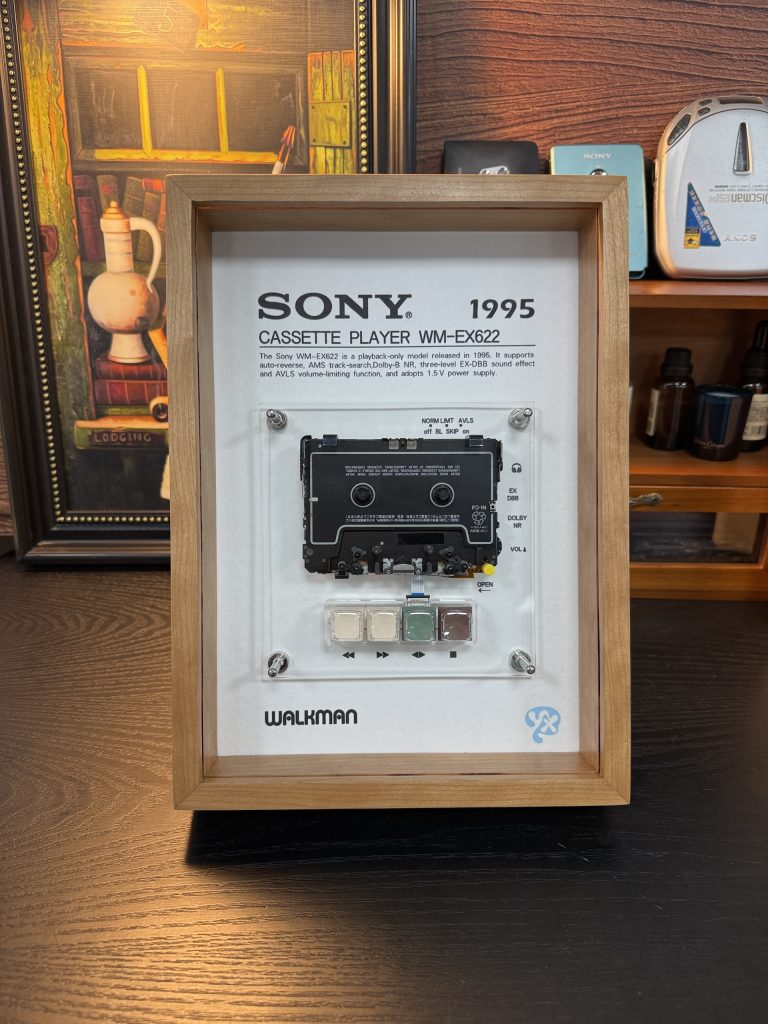
Your Walkman doesn’t have to live in a drawer. A framed Walkman turns a beloved machine into playable wall art — protected from dust and handling, but still ready to play whenever you want a physical tape experience. It’s the best of both worlds for collectors who want to enjoy their audio, not just store it.
Final thought
A vintage Walkman cared for properly will outlast most modern electronics. Store it well, play it often, clean it gently, and let a professional handle the serious repairs. If you’d rather start with a player that’s already been through that process, take a look at our restored cassette players — each one is serviced by hand, test-played, and ready to hang on your wall.
Related reading
- How to Restore a Vintage Walkman: A Beginner’s Guide — If it has already stopped playing, start here instead.
- Can You Add Bluetooth to a Vintage Cassette Player? — Adding Bluetooth without disturbing the mechanism.
- How to Frame a Walkman: Turning a Vintage Player into Wall Art — Storing and displaying it so it stays out of a drawer.